
Energy supplements from BE18: why it takes two energy framework calculations
Why an energy supplement requires a BE18 calculation both with and without the supplement, and how it is used in LCAbyg.
An energy supplement is used when a building has a documented additional energy demand, for example because of high lighting levels, extra ventilation, high hot-water use, long operating hours or a large ceiling height. The supplement must be split into electricity and heat before it is entered in LCAbyg.
Why two calculations?
Section titled “Why two calculations?”A BE18 key figure shows the total energy demand, but does not directly show how much is caused by the condition that qualifies for the supplement. Run the energy framework calculation twice:
- Once with the conditions that give the supplement.
- Once without those conditions.
The difference between the two calculations is the energy supplement. Calculate the difference separately for electricity and heat, and enter the two values under Supplement in Building and Operation.
Energy10 and Rockwool’s energy calculation program
Section titled “Energy10 and Rockwool’s energy calculation program”The BE18 energy framework calculation may have been carried out in Energy10 or in Rockwool’s energy calculation program. The procedure in LCAbyg is the same either way: find the energy demand for electricity and heat in the program’s results, and use the same units and assumptions in both calculations.
Enter the energy demand without applying a primary-energy factor. LCAbyg needs the actual energy demand for electricity and heat, not the weighted value used to check the energy framework. If you calculate an energy supplement, obtain the electricity and heat values from both the calculation with and the calculation without the conditions that give the supplement.
Overheating
Section titled “Overheating”If BE18 shows an energy demand caused by overheating, include it as electricity for cooling. Divide the overheating energy demand by 1.9, and add the result to the electricity demand. Enter the heat demand separately.
Only overheating is divided. The key figures for heat and electricity for building operation are already the building’s actual energy demand without a primary-energy factor, whereas overheating appears in the energy framework as a contribution that is already weighted as electricity for cooling by the factor 1.9.
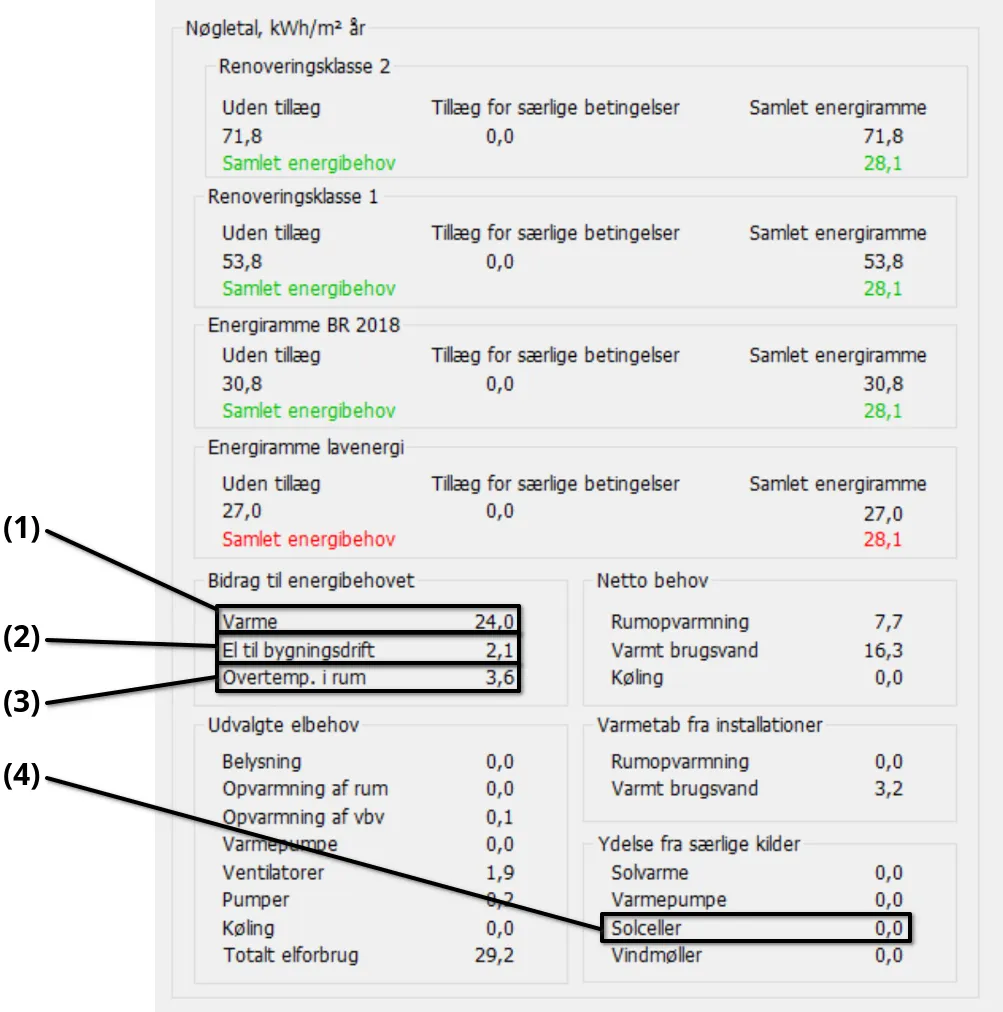
Example: 3.6 kWh/m²/year for overheating becomes 3.6 / 1.9 = 1.9 kWh/m²/year for cooling. If BE18 also shows 2.1 kWh/m²/year for electricity, enter a total electricity consumption of 4.0 kWh/m²/year.
Example
The figures appear under Bidrag til energibehovet in the BE18 key figures: (1) Varme (heat), (2) El til bygningsdrift (electricity for building operation) and (3) Overtemp. i rum (overheating in rooms). (4) Solceller (photovoltaics) appears under Ydelse fra særlige kilder.
Important when entering the values
Section titled “Important when entering the values”The operational energy must come from the calculation with the conditions that give the supplement if you fill in the supplement fields. LCAbyg then subtracts the supplement when making the calculation, so the results can show both the increased and the applicable climate impact.
Filling in the supplement fields is not required. You can also enter the key figures from the calculation without the conditions that give the supplement and leave the fields empty.